A room can have beautiful furniture and still feel difficult to live in. The sofa blocks the balcony door. The dining chairs cannot slide back far enough. A large cabinet leaves an awkward gap that is too small to use. Often, the problem is not the style of the furniture. It is the order in which the decisions were made.
If you are exploring furniture for a home in Pakistan, Furnitures Hub can be a starting point for browsing ideas. Before choosing a design, though, put your room measurements, daily needs and budget on the same page. That simple step makes it easier to decide which pieces belong on your shortlist.
Whether you are setting up a first apartment, furnishing a home after marriage or updating a family lounge, think beyond the day everything arrives. Picture an ordinary evening: someone watching television, another person working at a table, and family members moving between rooms. Good furniture choices should make that routine comfortable.
The following guide explains what to measure, what to ask a seller and how to compare your options before placing an order.
Before opening a catalogue, write down what happens in the room on a normal weekday. Does the lounge also become a homework area? Does someone work at the dining table? Do older family members need seating that is easy to get up from? Are guests frequent visitors, or do you host a larger gathering only a few times a year?
Those answers should shape the buying list. A family that eats together every evening may get more use from comfortable dining chairs than from a large decorative console. Someone who rents and moves regularly may prefer pieces that can be taken apart and carried through narrow entrances.
Separate daily needs from occasional needs. Buying permanent seating for the largest gathering you can imagine may leave the room crowded for the rest of the year. A smaller everyday arrangement, with a practical plan for extra guests, can work better.
Also decide what you will keep. An existing table, favourite armchair or storage unit can give the new room a starting point. Photograph these pieces and note their dimensions before choosing anything else.
A room measurement is more than its length and width. Doors need to swing open. Curtains need room to hang. Drawers need to pull out, and chairs need space behind them. A furniture layout that ignores these movements can look tidy on paper but feel awkward in daily life.
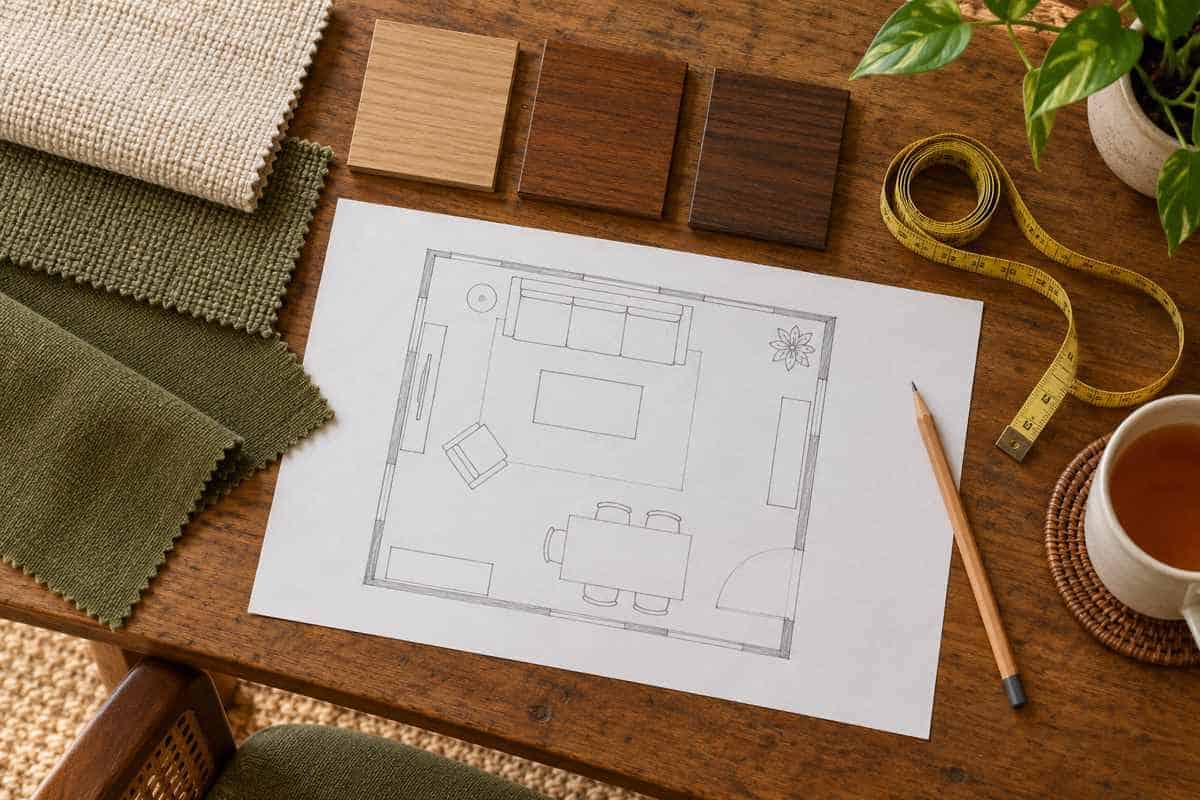
Make a simple sketch and mark doors, windows, sockets, columns and fixed cupboards. Record where people enter and where they usually walk. Use one unit throughout your notes so that centimetres, inches and feet do not become mixed in a supplier conversation.
Next, mark the proposed furniture footprint on the floor with removable tape, after checking that it will not damage the surface. Walk around it. Carry a tray through the room. Pull an existing chair back where the new dining chair would sit. These small tests can reveal problems before money changes hands.
Check the delivery route too. Measure the main entrance, lift opening, stair turns and internal doorways. Ask for the item’s largest delivery dimensions, including packaging where relevant. Removable legs may help, but never assume a frame comes apart unless the seller confirms it.
It is easy to collect twenty attractive designs and still feel unsure about what to buy. A short brief gives every option something clear to meet.
For each item, note its purpose, maximum dimensions, preferred material, colour range and spending limit. Add any non-negotiable detail, such as removable covers, a particular seat height or storage that opens from the front.
With that brief ready, you can browse the furniture collection and compare suitable options against the same requirements. Save only the options that fit the room and the job. Ask about anything missing from the listing before treating it as a serious candidate.
Keep the shortlist small enough to compare properly. Three well-understood options are more useful than thirty screenshots with no measurements. If none meets the brief, change one preference at a time so you know what you are trading away.
The displayed price is only one part of a purchase. Depending on the order, delivery, assembly, fabric upgrades, custom dimensions or access difficulties may affect the total. Ask which charges apply and have them included in a written quotation.
Plan the budget around the items you use most. Daily seating, a suitable work surface and useful storage may deserve priority over decorative additions. That does not mean every main piece must be expensive. It means its comfort and construction deserve careful attention.
Keep some money uncommitted until you know the full delivered cost. The amount depends on your order, so use actual quotations rather than a fixed rule copied from someone else’s renovation.
If the total becomes uncomfortable, reduce the number of pieces before accepting unclear specifications. It is often easier to add a side table later than to replace a sofa that was wrong from the start. A partly furnished room can still work well when its main functions are covered.
Words such as “wooden,” “premium” and “luxury” do not tell you enough about construction. Ask what material is used in the frame, visible surfaces, shelves, drawer bases and back panels. Different parts of the same item may use different materials.
If a piece is described as solid wood, ask which parts that description covers. If it uses a veneer, ask what sits underneath it. For board-based furniture, ask about the board type, edge finish and care requirements. A clear description is more useful than a broad claim that one material is always the best.
Look closely at how the item is put together. On a showroom piece, check that doors line up, drawers move smoothly and handles feel secure. Look at corners and less visible surfaces as well as the polished front. These checks can identify obvious problems, although they cannot prove everything about hidden construction.
For an online order, request current close-up photographs or a short video of the actual model. Ask whether the shown finish and materials match the quoted version. Keep those answers with the order so there is a shared reference later.
Fabric needs to suit the people who will use it. A formal sitting room and a busy family lounge may need different choices, even when you like the same colour in both.
Ask for the fabric name or code, composition if available, and recommended cleaning method. Find out whether covers can be removed and whether they are intended for home washing or professional cleaning. A zip does not automatically mean the cover is washable.
If possible, view a sample in your own room during daylight and in the evening. A shade can look different under showroom lights or on a phone screen. Place the sample beside your curtains, flooring and any furniture you plan to keep.
For homes with children, pets or frequent food spills, think about texture and maintenance as well as colour. Ask what the supplier means by claims such as stain resistance. No fabric should be assumed to handle every spill without care. Choose something you can realistically look after instead of something that only suits a carefully styled photograph.
A sofa is a place to sit, not simply a shape to match with curtains. Whenever possible, try the model in person and sit as you normally would at home.
Check whether the seat supports you comfortably and whether your feet can rest naturally. Notice the back angle and arm height. A deep, low seat may suit one person and feel difficult for another. If several family members will use it daily, include their needs in the decision.
Test dining chairs with the intended table height. Armrests may look attractive but prevent the chair from sliding underneath. A thick seat cushion can also change how much room remains for your legs.
If an in-person test is not possible, compare the listed seat dimensions with a chair you already find comfortable. Ask for seat height and depth, not only the overall size. This will not replace trying the furniture, but it gives you a better starting point than appearance alone.
You do not need every piece to belong to one matching set. Start with the largest item, then choose supporting pieces that share a few clear details, such as a similar wood tone or a restrained colour palette.
Pay attention to visual weight. A room filled with bulky arms, deep cabinets and large tables can feel crowded even when each piece technically fits. Mixing substantial seating with a lighter-looking table may make the arrangement feel more open.
Imagine a rectangular lounge with a doorway at one end and a balcony at the other. Placing a large sectional across the direct walking route may interrupt the whole room. A straight sofa and separate chairs could offer a more flexible arrangement. The right answer depends on the actual dimensions, so test both on your sketch.
Keep returning to your room plan as you compare designs. A photograph can help you choose a style; your measurements and daily routine should decide whether that style belongs in your home.
Custom work can be worth considering when standard sizes do not suit a room. A shallow cabinet, a shorter sofa or a table built around a particular space may solve a genuine problem. Start by describing that problem clearly.
Agree on dimensions, materials, finish, fabric and included fittings before production begins. For visible details, use labelled reference photographs or a sample that both sides recognise. A phrase such as “same as the picture” leaves too much room for different interpretations.
Ask how changes are handled after approval. Confirm whether a size adjustment affects the price, delivery date or return options. If production happens in stages, find out when you can review progress and what can still be changed at each stage.
Keep all approvals in one conversation or document. A final order sheet should reflect the latest agreed version. This reduces the chance that an old screenshot or an earlier measurement becomes the instruction used in the workshop.
Two prices are difficult to compare when they describe different furniture. One quote may include a particular fabric, transport and assembly, while another may cover only the basic item.
Use a short comparison sheet with the same questions for each seller:
| Detail | What to confirm | Why it matters |
| Dimensions | Overall size, usable seat size and delivery size | Helps check room fit, comfort and access |
| Materials | Frame, surface, panels and upholstery | Makes the quoted construction clearer |
| Finish | Approved colour, sample or finish code | Gives both sides a reference |
| Total cost | Item price, delivery, assembly and agreed extras | Helps avoid comparing incomplete prices |
| Timing | Ready stock or production schedule, plus delivery estimate | Helps you plan around a move or event |
| After-sales terms | Written coverage, exclusions and reporting process | Explains what support is actually offered |
Keep the answers specific. “Good quality” is not a substitute for a material description, and “soon” is not a delivery date. If an answer remains unclear, treat that as an unresolved part of the purchase rather than filling in the gap yourself.
Price still matters. A lower quotation may be perfectly suitable, but you should understand what it includes before deciding that it offers better value.
A useful enquiry saves time for both buyer and seller. Include your city, item list, room or item dimensions, preferred style, approximate budget and desired delivery period. Mention stairs, lift restrictions or other access details early.
Attach only the reference images that matter, and explain what you like about each one. You might want the shape of one sofa but a different fabric and a smaller width. Without that explanation, the seller may assume you want an exact copy.
Once you have a shortlist, you can discuss your furniture requirements with Furnitures Hub. Share your measurements and ask for current availability, the full delivered cost and a written quotation. Confirm the arrangements for your city and the specific items you want before finalising the order.
Before paying a deposit, check that the business details, payment recipient and final order information are consistent. Keep a receipt and a copy of the agreed terms. These records make follow-up discussions much clearer.
Confirm the delivery arrangement before the expected date. Ask who will handle carrying and assembly, whether any access equipment is needed and what you should do if the team is delayed.
Clear the route and move fragile objects out of the way. Have your order sheet available so you can compare the delivery with the approved details. Where inspection is possible, check the finish, fabric, dimensions, fittings and included parts before signing acceptance.
Photograph any visible damage or mismatch and report it promptly through the seller’s stated process. Ask how it will be resolved and keep the response. If packaging needs to be retained for a claim or return, clarify that before throwing it away.
After assembly, check that the furniture sits steadily and that moving parts operate as expected. Follow the supplied care and installation instructions. Keep warranty records, fabric codes and finish details somewhere easy to find; they may be useful if you need help or want a matching item later.
Consider a hypothetical apartment lounge used by four people each day, with extra guests visiting occasionally. The initial wish list includes a large sectional, two armchairs, a coffee table and a console. Each item looks reasonable on its own, but together they may leave little room to walk.
Start by marking the everyday seating and the route to the balcony. If the sectional blocks that route, test a straight sofa with separate chairs instead. If a large coffee table fills the remaining space, try a smaller table footprint on the floor before ordering. Keep the console off the list unless it has a clear job and a suitable wall.
Next, think about the occasional visitors. Could an existing dining chair provide temporary extra seating? Would a movable stool be useful elsewhere when guests leave? Check comfort and stability rather than assuming any small item can serve as a seat.
This exercise does not give every apartment the same layout. It shows how a shorter buying list can emerge from real needs. The room plan should decide how much furniture to buy, even when a larger package looks attractive in a sale.
Only if the included pieces suit your space and you will use them. Compare the package with the cost of the individual items you actually need. An extra chair or cabinet is not a saving if it makes the room harder to use or has to be stored elsewhere.
No. It is most useful when it solves a clear issue, such as an unusual width, a specific storage need or a preferred layout. If a standard piece already fits and feels comfortable, custom work may add decisions and waiting time without improving the result.
Request dimensions, materials, current photographs, selected finish options and the complete delivered price. For seating, include seat height and depth. If the seller cannot clarify an important feature, keep it marked as unknown rather than assuming the photograph tells the whole story.
Yes. Begin with the pieces needed for daily life, then add the rest after using the space. Keep fabric and finish references for later purchases, but ask whether future batches may differ. Leaving some space unfilled can help you notice what is genuinely missing.
Use one final written order sheet. Include dimensions, approved materials, fabric and finish codes, reference images, total price and agreed timing. Ask the seller to confirm it before work starts. Record any later change in writing so both sides use the same version.
Before committing, check five things: the furniture fits the room, it can reach the room, it supports everyday use, the full cost is clear and the order details are written down.
If one answer is missing, ask before paying. You do not need to understand every workshop technique to make a careful choice. You need enough clear information to compare the item with your needs.
A comfortable home takes shape through these ordinary decisions. Measure carefully, choose for the people who live there and leave enough room to move. The best result is a room that still feels right after the photographs have been taken and everyday life returns.